
Get full access with a free account
Benefits of the Coloplast® Professional Educational platform
- Get full access to all educational content, events and resources
- Track your progress
- Share content with your collegues
- Share supporting material with your patient
Introduction
This article dives into the realm of wounds and their healing processes. It begins by defining what constitutes a wound and how the body's innate mechanisms kick into action when the skin is injured. From tissue regeneration to tissue repair, it explores the intricacies of wound healing while highlighting the distinct stages involved.
What is a wound?
The skin is our body’s most accessible organ. As such, it’s very easy to damage or wound it. When you injure the skin, the body tissue loses its continuity. This can happen as the result of trauma, infection or some pathological process, such as inflammation.
When the skin is injured or damaged, a wound is created. Once this happens, the body immediately begins to repair itself. It does this by re-establishing tissue integrity in order to restore the skin’s barrier function.
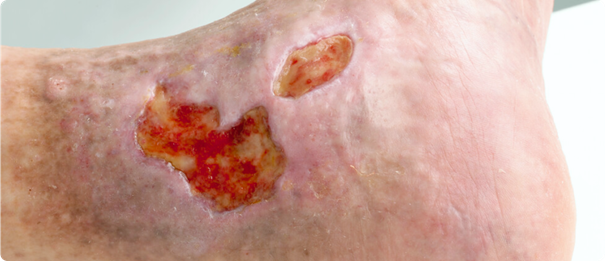
Tissue regeneration
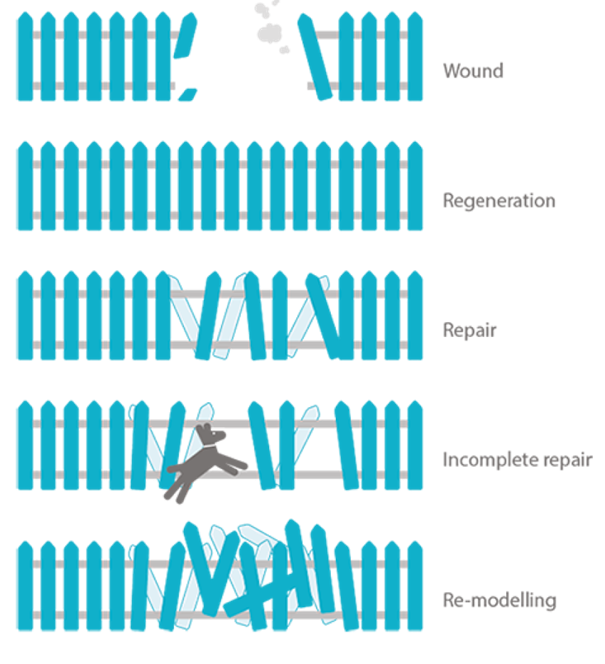
Tissue regeneration is when the body replaces damaged tissue by replicating identical cells. This is the ideal healing method. The regenerated tissue has the same function as before, and the skin resembles its original appearance. Unfortunately, the body can only regenerate certain cell types, such as epithelial cells*.
Tissue repair
Tissue repair is when the body repairs damaged or destroyed dermal or subcutaneous tissue. However, in this case, the repaired tissue loses its specialized function and original structure. This is a more complicated process, which causes scarring and changes the skin’s appearance.
Evidently, wound healing is a very sophisticated process that follows a set sequence of events.2 In the next section, we’ll take a look at the four stages of wound healing.
Did you know?
The amount of exudate, or wound fluid, increases during the inflammatory stage. This helps to cleanse the wound and provide a moist environment that maximises healing. However, if a wound starts producing too much exudate, this can slow down the healing process. To learn more about wound exudate and how to manage it, read this article.
Leakage results in increased product usage, with patients requesting consultations with nurses
Leakage negatively impacts the healthcare system, with 96% of cases requiring two or more patient consultations with stoma care nurses to address a patient’s leakage issues. Leakage and skin complications are the main issues during patient consultations. Additionally, leakage results in increased use of supporting stoma products