
Get full access with a free account
Benefits of the Coloplast® Professional Educational platform
- Get full access to all educational content, events and resources
- Track your progress
- Share content with your collegues
- Share supporting material with your patient
A study on the transanal irrigation system
Many clinical studies and reviews have been published on transanal irrigation and the use of Peristeen. More than 1,000 patients have evaluated the treatment modality. Peristeen reduces symptoms of constipation and fecal incontinence. A large randomized controlled trial investigated the efficacy and safety of Peristeen compared to conservative bowel management treatment - defined as adjustment in diet and fluid, regular activity and use of laxatives or constipating medication(1).
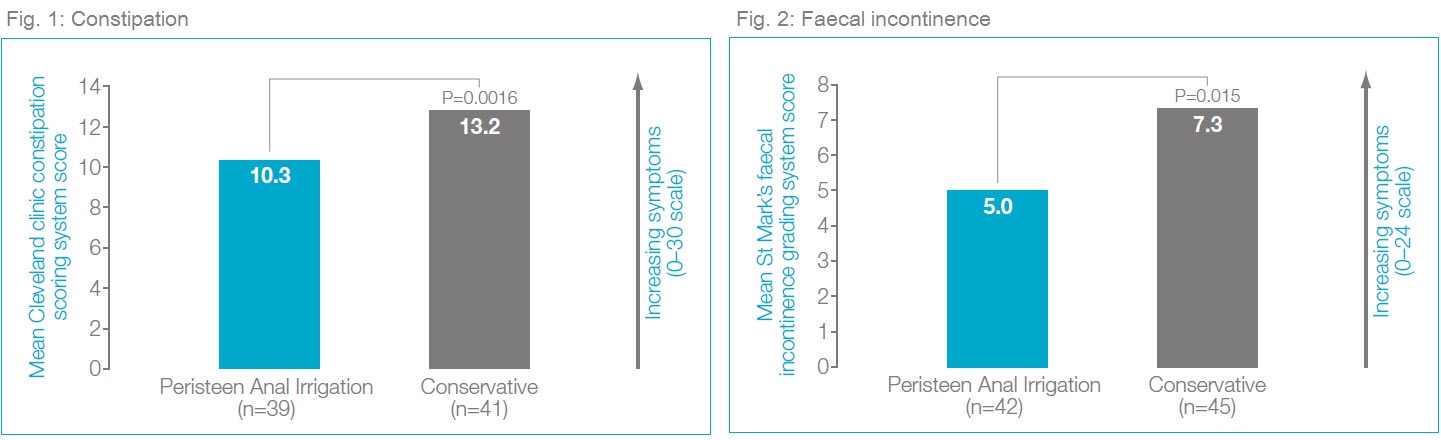
Fig. 1: A significant reduction in constipation symptoms from13.2 to 10.3 when using Peristeen compared to conservative treatment.
Fig. 2: A significant reduction in faecal incontinence symptoms from 7.3 to 5.0 when using Peristeen compared to conservative treatment.
Peristeen is proven to be safe in use
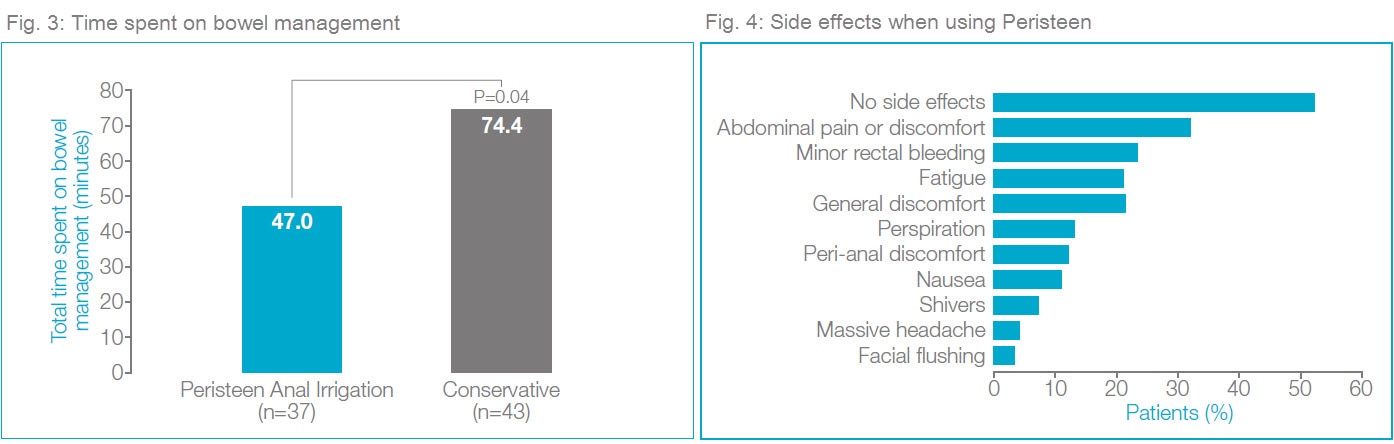
Fig. 3: Time spent on bowel management was reduced from74.4 to 47.0 minutes when using Peristeen(2).
Fig. 4: Side-effects List of side-effects when using Peristeen(3).
- Minor side effects were reported in 48% of patients in a long-term study
- One non-lethal bowel perforation occurred in ~ 50,000 irrigations
- Christensen P et al. A randomized, controlled trial of transanal irrigation versus conservative bowel management in spinal-cord injured patients. Gastroenterology 2006;131:738-747.3.
- Faaborg PM et al. Long-term outcome and safety of transanal colonic irrigation for neurogenic bowel dysfunction. Spinal Cord 2009;47:545-549.4.
- Emmanuel A. Review of the efficacy and safety of transanal irrigation for neurogenic bowel dysfunction. Spinal Cord 2010;48:664-673.